Hybrid and Virtual Event Production in Egypt: Setup Cost and Technical Floor for 2026
Updated: Jun 1
Hybrid and virtual events are now standard for Egyptian corporate teams running internal town halls, partner conferences, and regional product launches. The technology is mature, the demand is steady, and yet roughly half of the hybrid events we get called in to fix were produced by someone who set up a webcam on a tripod and hoped for the best.
This is a breakdown of the actual technical floor for a professional hybrid or virtual event in Egypt in 2026, and what each tier costs.
The five technical pillars
Every hybrid or virtual event rests on five technical systems. Cut corners on any of them and the whole event reads as amateur.
The five pillars are cameras, audio capture, lighting for camera, content switching and streaming, and the streaming platform itself. Each has a floor.

Cameras: not a webcam
Tier 1, baseline professional, is two PTZ cameras operated remotely by a director, 1080p output. Suitable for a one-presenter setup or a panel of 2 to 3. Daily rental for two PTZ cameras with operator runs 8,000 to 15,000 EGP in Cairo in 2026.
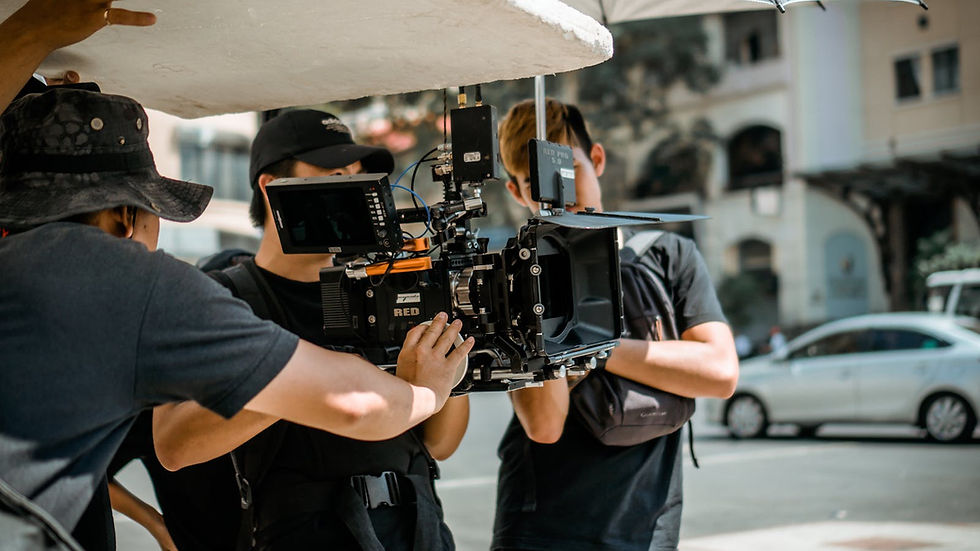
Tier 2, mid, is three to four broadcast-grade cameras with dedicated operators, 1080p or 4K, including one wide and at least one handheld. Suitable for keynotes with audience reaction shots, awards, and panels with audience interaction. Costs 25,000 to 50,000 EGP per day with crew.
Tier 3, premium, is a full broadcast setup with five or more cameras including jib, slider, and roaming, full 4K, with director and dedicated camera operators. Costs 60,000 to 120,000 EGP per day. Most corporate hybrid events do not need this tier.
Audio capture: where most events fail
Audio is where DIY hybrid events get exposed the fastest. Bad audio is more fatigue-inducing than bad video.
The floor for professional capture is lavalier microphones for any seated speaker, handheld wireless for any moving speaker, a dedicated audio engineer at the board, and a separate program audio feed to the streaming encoder that is independent of room reinforcement. Total audio package for a one-day hybrid event with up to 4 mic positions runs 8,000 to 18,000 EGP including engineer.
The single biggest mistake we see is sending the room PA mix to the stream directly. The audience in the room hears what they need to hear; the remote audience hears reverb, ambient noise, and unintelligible levels. The program feed has to be mixed for the stream separately, by an engineer who can hear what the stream is getting.
Lighting for camera
Stage lighting designed for the in-room audience is rarely correct for camera. Cameras need more even, slightly brighter, color-balanced light, especially on faces. Adding camera-specific lighting to an existing stage typically costs 5,000 to 15,000 EGP per day in additional fixtures, depending on the room.
The shortcut that does not work is relying on house lighting in a hotel ballroom. House lighting is built for ambience, not faces on camera. Speakers end up shadowed or yellow-cast, and on the stream they look ill.
Content switching and streaming
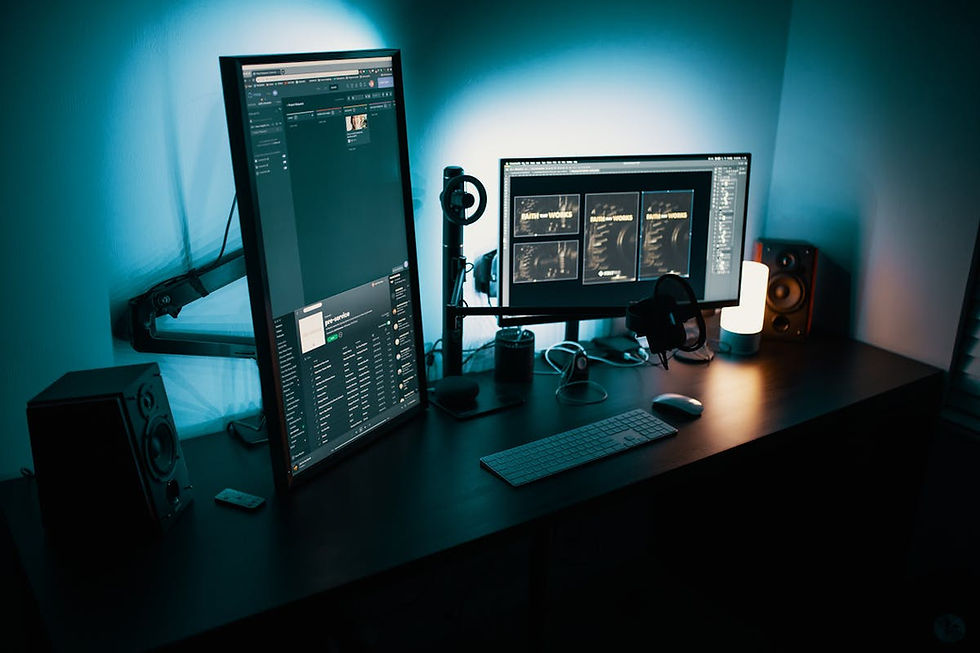
This is the production hub: a video switcher (vMix, ATEM, or similar) that takes camera feeds, presentation slides, video playback, and lower-thirds, mixes them in real time, and pushes the output to the streaming platform.
You need a dedicated streaming engineer at this station, not the same person running camera or audio. The engineer monitors signal quality to the platform, manages transitions, pushes graphics, and watches for streaming errors in real time.
Streaming infrastructure for a one-day event runs 10,000 to 25,000 EGP including switcher, encoder, redundant bonded internet, and engineer. The bonded internet matters. Relying on a single venue Wi-Fi or cellular connection is how streams drop mid-keynote.
Streaming platform
The platform itself is a downstream choice but worth getting right. YouTube and Vimeo are fine for open broadcasts. For gated corporate events with registration, ticketing, breakout rooms, and Q&A management, you need a dedicated platform such as Hopin, Bizzabo, Brella, or similar. Platform costs for a one-day event range from free (YouTube unlisted) to 30,000 to 80,000 EGP for a fully gated platform with concurrent attendee tiers.
Do not pay for platform features you will not use. A keynote with a Q&A does not need breakout rooms.
The hybrid setup adds two more layers
A hybrid event, meaning a live audience in the room plus a streaming audience, adds complexity in two places.
First, the room needs to feel like the primary experience. The cameras and remote audience are watching the in-room event, not driving it. If the speaker spends half their stage time looking into the camera, the in-room audience feels like spectators in their own event.
Second, two-way interaction between room and stream is a separate technical workflow. If you want remote attendees to ask live questions seen on stage, that requires a moderator workflow plus a return-feed display visible to the speaker. Adding two-way runs another 5,000 to 12,000 EGP in equipment and a dedicated remote-feed moderator.
Realistic budget floors for 2026
The honest minimum for a professional one-day hybrid or virtual event in Egypt:
Virtual-only, single presenter, basic: 35,000 to 55,000 EGP. Two cameras, audio engineer, lighting, streaming engineer, basic platform.
Virtual-only, panel or multi-segment: 60,000 to 100,000 EGP. Three to four cameras, full audio package, content graphics, registered platform.
Hybrid, room of 100 to 200, broadcast to remote audience: 120,000 to 220,000 EGP. Full in-room production plus streaming layer plus two-way interaction.
Hybrid, large conference, multi-day, multi-track: 400,000 EGP and up. Multi-room streaming, registration, breakout, on-demand library.
These ranges are for production only, not venue, content, or speaker fees. Anyone quoting below these floors is either cutting corners on one of the five pillars, or does not actually understand the technical requirements.
The two failure modes
The first failure mode is "we will handle streaming ourselves." Most internal teams underestimate how much engineering attention live streaming requires. The stream drops, the audio is off, the video buffers, and the brand impression is permanently damaged for the remote audience.
The second failure mode is "the AV company also does streaming." Many traditional AV companies in Egypt added streaming to their offering after 2020 but treat it as an add-on, not a core competency. The result is competent room production with a substandard stream. Vet streaming capability specifically. Ask for sample streams from real client events, not generic showreels.
What to verify when briefing
When you brief a production company for a hybrid event, get answers in writing on redundant internet plan, audio program-feed mix separation, on-site streaming engineer (not remote-only), camera operator count, return-feed setup for two-way interaction, and pre-event streaming test from the actual venue.
If a vendor cannot answer all six confidently, they should not be running your stream.
Wampum runs hybrid event production from internal town halls to multi-track regional conferences. If you are scoping a hybrid event, send us the rough audience size and event type and we will come back with a realistic budget range before you put anything out to RFP.


Comments